Outdoor kitchens
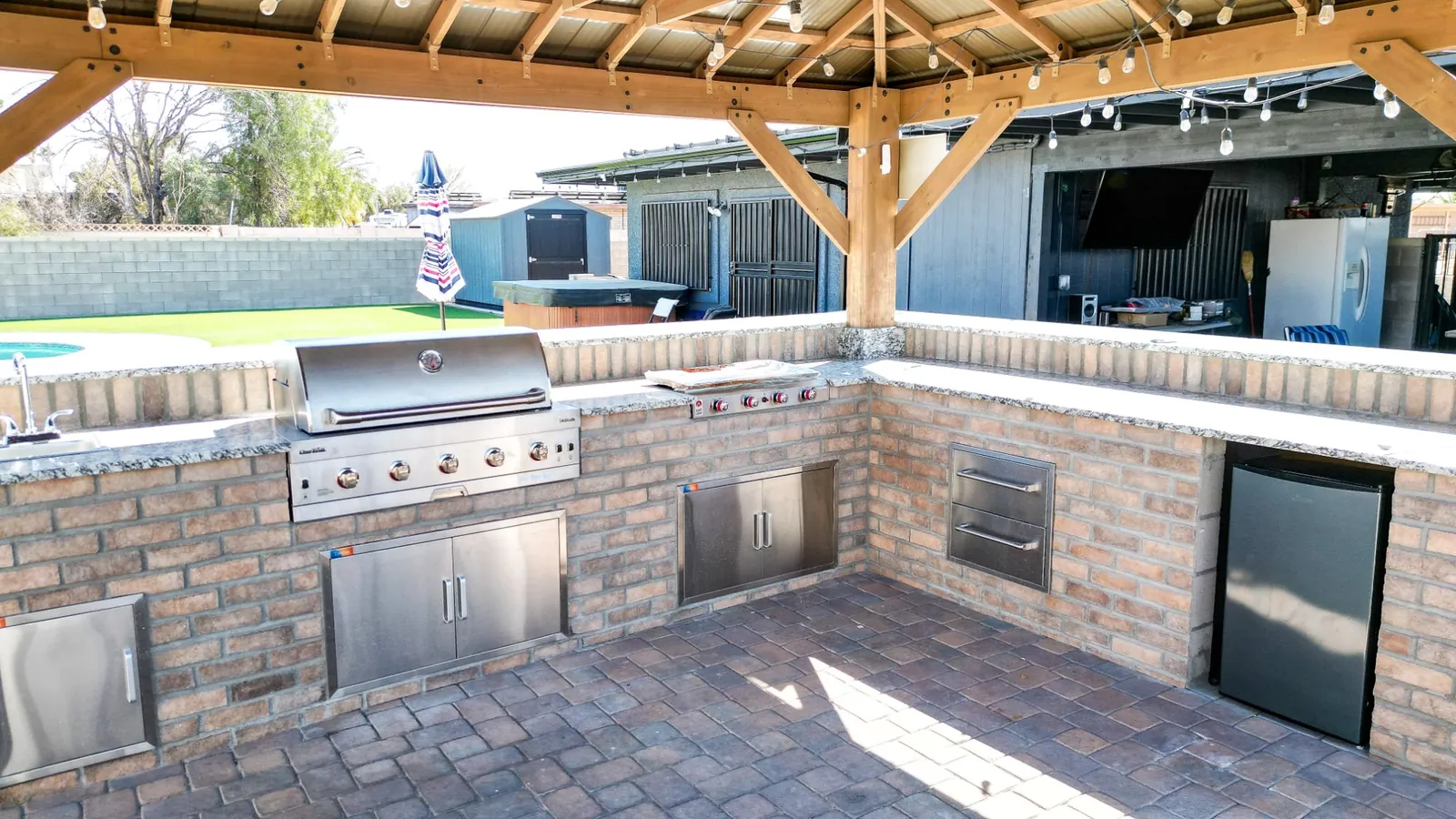
Built-in grills, side burners, refrigeration, sinks, storage and bar seating. Gas, water and electrical run properly and permitted — not a grill pushed against a wall with an extension cord.
✦ September Bathroom Event — free design consultation plus one premium upgrade included. Book by September 30. Call (520) 548-2125 left
Outdoor Living
Tucson gives you eight months of superb outdoor weather and four months that will destroy anything built carelessly. We build for both.
The most common mistake in Tucson backyards is a beautiful outdoor kitchen with no meaningful shade over it. It gets built in March, it is wonderful in March, and by mid-June nobody has stood at that grill in three weeks because the stainless is at 150°F and the concrete underfoot is worse.
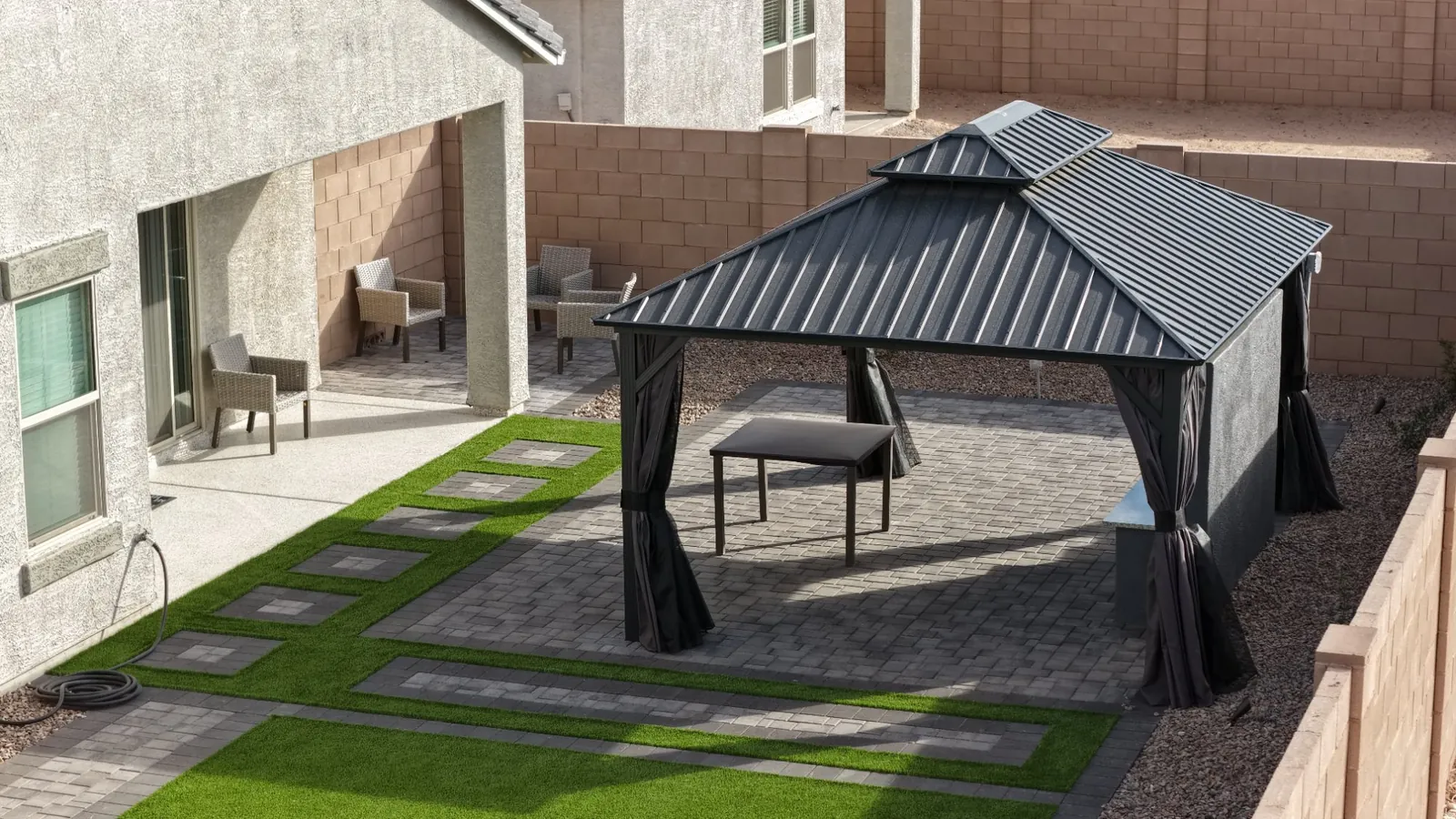
Shade is not a finishing touch here. It is the structure the whole space depends on, and it should be designed first — a ramada, a solid-roof extension, a substantial pergola with real coverage, or mature tree canopy where you have it. Then the kitchen goes underneath it.
Orientation matters as much as coverage. A west-facing patio takes the full afternoon sun exactly when you want to use it, and shade from directly overhead does very little at 5pm in July when the sun is low. A structure that shades the west side, or a space positioned on the north or east elevation, changes how many months of the year the yard is genuinely usable.
And then there is monsoon. Outflow winds ahead of a Tucson storm regularly hit 40–60 mph. Shade sails and lightweight pergolas that were never engineered for uplift end up in a neighbour's pool. Anything we build is engineered and permitted for wind, footed properly, and attached to the house — if it attaches at all — with flashing that will not become a leak.
Materials that survive here
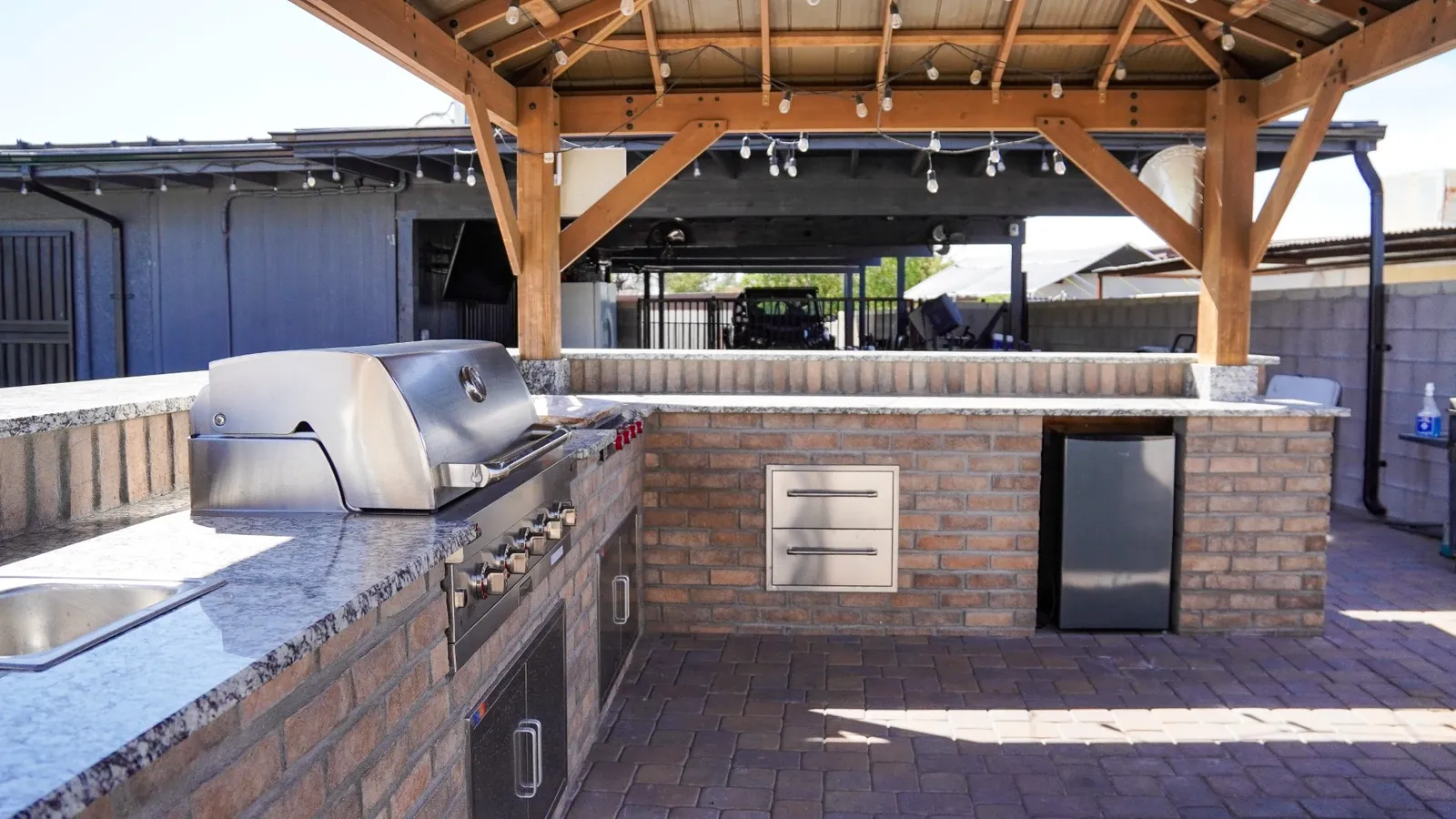
Countertops: granite, porcelain slab or sealed concrete. Not quartz — the resin binder in engineered quartz degrades and discolours under sustained UV, and most manufacturers void the warranty for outdoor use. It is the most common specification error we are asked to fix.
Cabinetry: marine-grade polymer, powder-coated aluminium or masonry with stucco or stone veneer. Standard exterior-rated wood cabinetry does not last here; the combination of UV and 5% humidity takes it apart.
Appliances: 304 stainless minimum, and a cover for anything left out. Lower grades pit and rust even in dry air, particularly near a pool.
Underfoot: light-coloured pavers, travertine or a broom-finished light concrete. Dark surfaces in full sun get too hot to walk on barefoot — a detail that decides whether the space gets used.
What We Build
Built-in grills, side burners, refrigeration, sinks, storage and bar seating. Gas, water and electrical run properly and permitted — not a grill pushed against a wall with an extension cord.
Engineered for wind uplift and permitted. Solid-roof ramadas, substantial pergolas, and patio extensions tied into the house roof with correct flashing.
Gas or wood, with the clearances and gas line sizing done to code. The feature that most extends Tucson evenings from October through April.
Decking, shade, outdoor showers, and equipment screening. Surface temperature and slip resistance drive material choice more than appearance does.
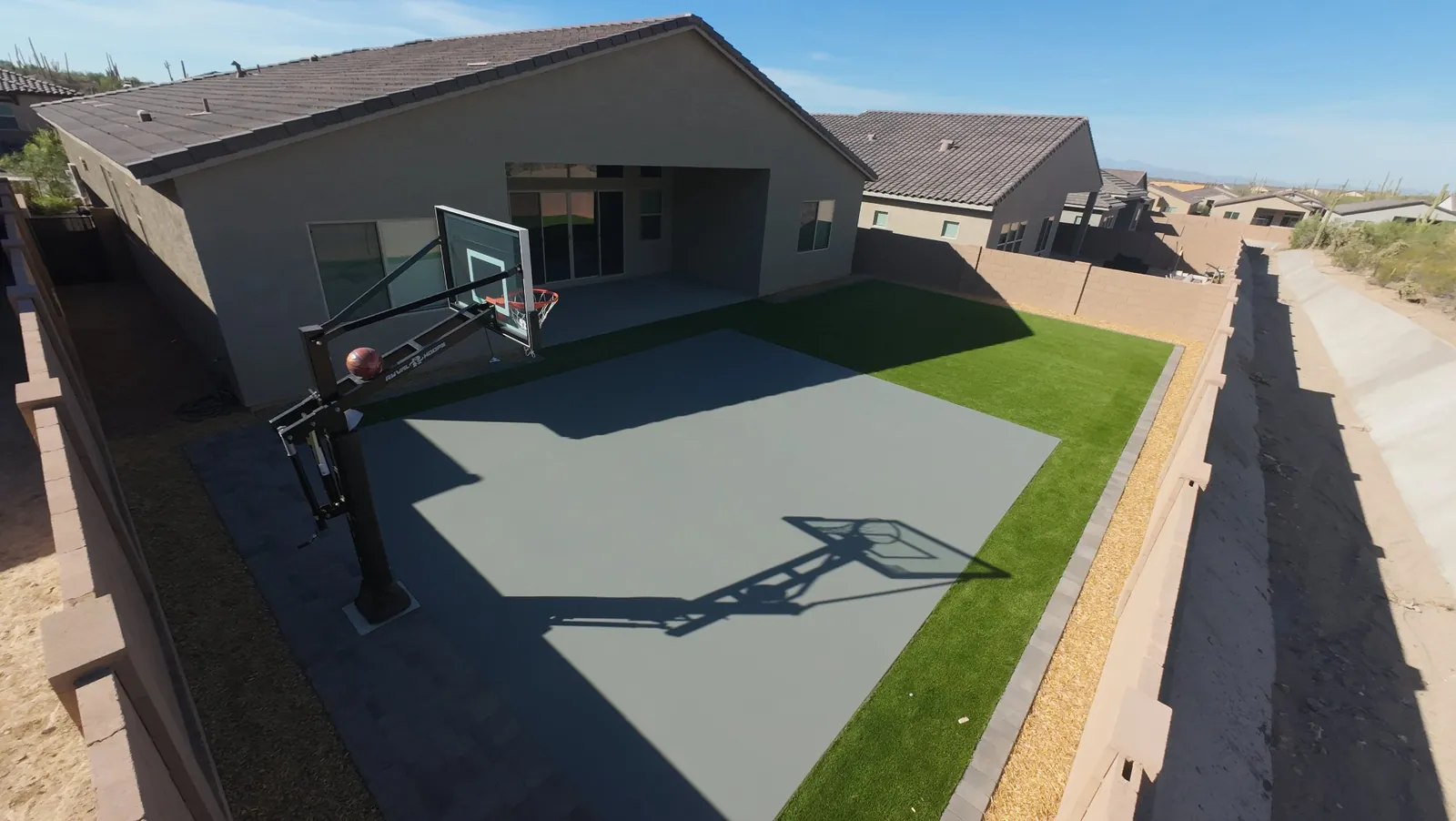
Basketball and pickleball courts, artificial turf with proper base and drainage. Turf specification matters — low-quality infill gets punishingly hot in direct sun.
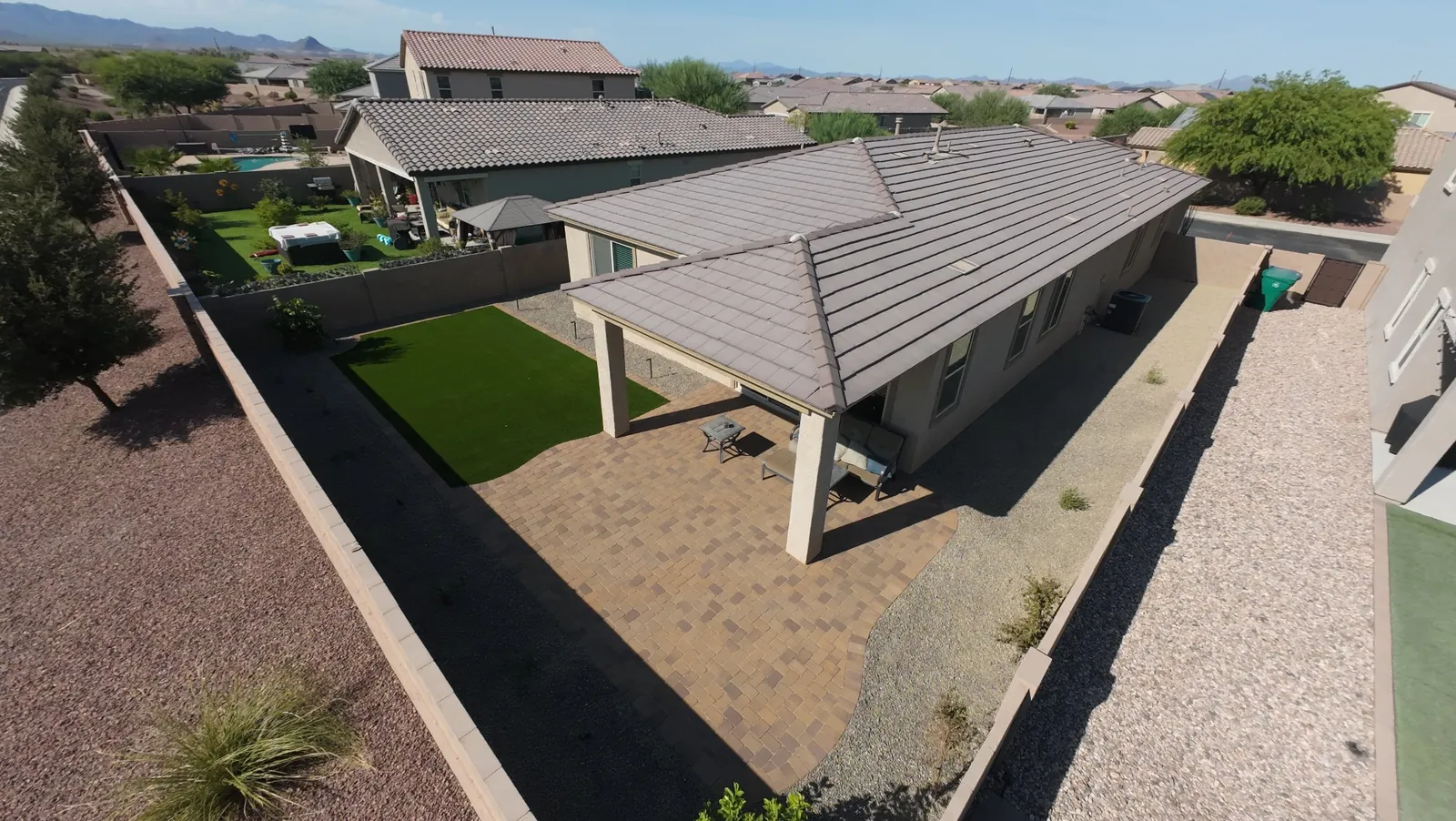
Paver patios, seat walls, steps and low-voltage lighting. See concrete and landscaping for the groundwork side.
Built For Monsoon
Between June 15 and September 30, everything outdoors is being wind- and water-tested. Four things we detail for it.
Outflow winds ahead of a storm cell routinely reach 40–60 mph and gust higher. Ramadas and pergolas need engineered footings and connections rated for uplift, not surface-mounted posts. This is also why they are permitted structures.
A monsoon cell can drop an inch of rain in an hour. Patios and hardscape must be sloped to move that volume away from the foundation, and any new impervious surface changes where water goes. Getting this wrong creates a foundation problem, not a puddle.
Where a patio cover attaches to the house, the flashing detail is the entire difference between a dry room and a stain on the ceiling. Sideways-driven monsoon rain finds every shortcut in that junction.
Haboob-style dust events coat everything and work into mechanisms. Outdoor kitchen drawers and doors need gasketing and appliances need covers, or the grit gets into the slides and the burners within a single season.
How It Runs
We look at where the sun actually is at 4pm in July, where the prevailing wind comes from, how water currently moves across the yard and what your views are worth protecting.
Shade structure first, then the kitchen and living zones under and around it. Utility routing for gas, water and electrical planned at this stage, because trenching decides sequencing.
Shade structures, gas lines, new electrical circuits and any roof attachment require permits. HOA architectural review runs in parallel where applicable.
Excavation, footings, and gas, water and electrical trenching. Caliche shows up here as it does everywhere in Tucson.
Ramada or cover built and, where relevant, tied into the house. Paving, seat walls and steps set on a properly compacted base.
Cabinetry, countertops, appliances, plumbing and low-voltage lighting. Commissioning of gas appliances and a walkthrough of every control before handover.
Straight Answers
2026 Tucson ranges for permitted, engineered outdoor construction.
| Scope | Typical Tucson Range | What Drives It |
|---|---|---|
| Outdoor kitchen — compact | $12,000 – $28,000 | Built-in grill, masonry or polymer cabinetry, stone or porcelain counter, storage. Gas and electrical run and permitted. No sink, which avoids water and drain trenching. |
| Outdoor kitchen — full | $28,000 – $70,000+ | Grill, side burner, refrigeration, sink with water and drain, bar seating, extensive counter and significant storage. Utility trenching is a large part of the difference. |
| Ramada / solid-roof shade structure | $18,000 – $55,000 | Engineered, footed and permitted, sized to the space it shades. Attached structures cost more because of the roof tie-in and flashing detail. |
| Pergola (substantial, engineered) | $9,000 – $26,000 | Real coverage and real footings — not a kit. Cheaper than a solid roof and gives partial rather than full shade. |
| Outdoor fireplace or fire feature | $6,000 – $24,000 | Gas line sizing, clearances and masonry construction. Fire pits sit at the lower end, full masonry fireplaces with a chimney at the upper. |
| Sport court / artificial turf | $14 – $30 / sq ft | Excavation, compacted base, drainage, and surfacing. Turf quality and infill type matter enormously for surface temperature in full Tucson sun. |
Paving, seat walls and site drainage are usually priced with the concrete and landscaping scope. Full comparison on the Tucson remodeling cost guide.
Recent Work
Local Detail
Where the community changes the work enough to be worth its own page.
Keep Exploring
Where We Work
We serve the whole Tucson metro. Pick your community for local detail — permitting authority, housing stock and what we typically build there.
Tucson · Oro Valley · Marana · Catalina Foothills · Sahuarita · Tanque Verde · Vail · Rita Ranch · Dove Mountain · Flowing Wells · Midvale Park · South Tucson · All service areas →
Straight Answers
A compact built-in outdoor kitchen with a grill, cabinetry, counter and storage typically runs $12,000–$28,000. A full outdoor kitchen with refrigeration, a sink, bar seating and extensive counter runs $28,000–$70,000 or more.
The single biggest cost jump is adding a sink, because that means water supply and a drain line trenched across the yard — and in Tucson, trenched through caliche.
We advise against it, and most manufacturers explicitly void their warranty for outdoor installation. The resin binder in engineered quartz degrades under sustained UV, causing discolouration, fading and eventual surface breakdown.
Granite, porcelain slab, sealed concrete and natural stone all handle Tucson sun properly. This is the most common specification mistake we are called to correct on outdoor kitchens built by others.
Yes. The City of Tucson requires a permit for roofing over a patio or carport, and the same applies across the surrounding jurisdictions.
Permitting is not bureaucratic box-ticking here — it means the structure is engineered for wind uplift, which matters when monsoon outflow winds routinely reach 40–60 mph. Unpermitted structures also create problems at resale and can complicate insurance claims.
It depends on which direction the space faces. A solid-roof ramada gives complete shade and the most usable space in summer, but it also blocks winter sun and makes the area darker.
A substantial engineered pergola gives filtered shade and keeps the space brighter. Where the problem is low afternoon sun on a west-facing patio, overhead shade alone does very little — you need vertical shading on the west side, or to reposition the space to a north or east elevation.
Shade is the foundation, and it has to be real coverage rather than decorative. After that, misting systems work genuinely well in Tucson's dry pre-monsoon heat and become much less effective during monsoon humidity.
Large ceiling fans under a ramada make a substantial difference. Light-coloured paving keeps surface temperature down enough to walk barefoot. And honestly: even a perfectly designed Tucson backyard is a morning and evening space in high summer, not a midday one. Design for the hours you will actually use.
Ours will, because they are engineered and permitted for uplift with proper footings and connections. Lightweight kit pergolas and shade sails frequently do not.
Outflow winds ahead of a Tucson storm cell regularly reach 40–60 mph with higher gusts. The failure mode is almost always the connection or the footing rather than the structure itself, which is exactly what the engineering addresses.
Yes, and it is a natural pairing. Two things need care.
Electrical near a pool has specific code requirements for GFCI protection, bonding and clearance distances, which is a genuine safety matter rather than paperwork. And the chlorinated, humid air around a pool is harder on stainless steel — 304-grade appliances and quality hardware are worth the difference here more than anywhere else in the yard.
Light-coloured pavers, travertine, or broom-finished concrete in a light tone. The governing consideration is surface temperature, because a dark patio in full Tucson sun becomes genuinely too hot for bare feet and pets, and a space people avoid crossing is a space they stop using.
Travertine stays notably cooler underfoot than most alternatives, which is why it is common around Tucson pools. Slip resistance when wet matters equally in pool areas.
Ends September 30 · left
Sign a full bathroom remodel by September 30 and pick one premium upgrade, included at no cost. Not a discount — an actual upgrade to the finished room, specified and installed as part of the build.
Custom-templated to your finished walls after tile. The single upgrade that most changes how a bathroom reads.
Electric in-floor heat under the tile, on its own thermostat. Impossible to retrofit later without pulling the floor up again.
A step up in cabinetry and countertop material — the two things you touch every morning for the next fifteen years.
One upgrade per household, on full bathroom remodels signed by September 30, 2026. Upgrade is specified during design and installed with the project; it cannot be exchanged for a credit or discount. Consultations and written estimates are always free and carry no obligation.
Free design consultation starting with sun, shade and drainage — the three things that decide whether a Tucson outdoor space works in July.