Stucco crack repair
Hairline cracking is normal on Tucson stucco and cosmetic. Cracks wider than about 1/8 inch, stair-stepping cracks, or cracks that reopen after repair indicate movement and need the cause addressed before any coating goes on.
✦ September Bathroom Event — free design consultation plus one premium upgrade included. Book by September 30. Call (520) 548-2125 left
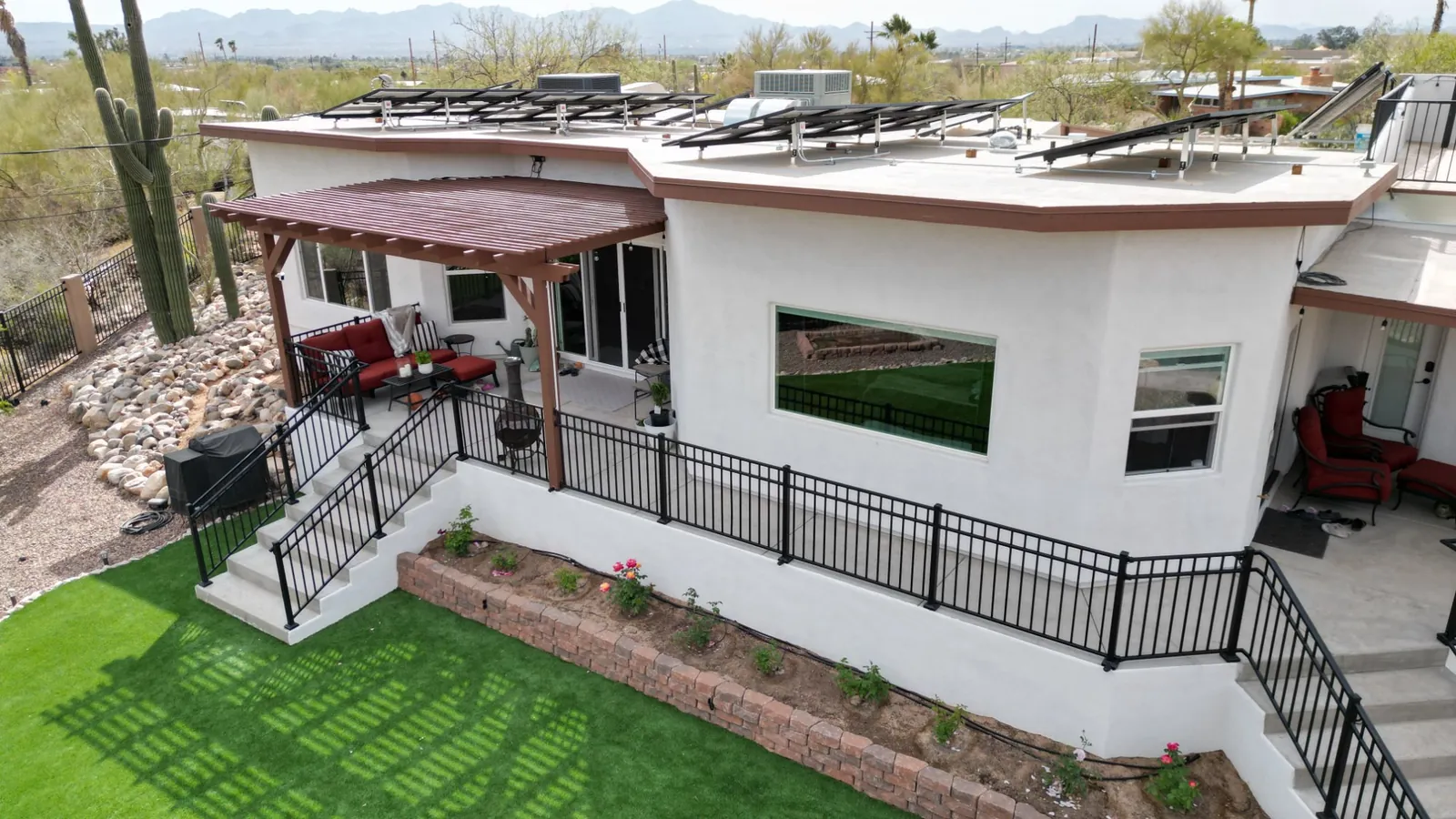
Exterior Restoration
Tucson sun destroys an exterior faster than almost anywhere in the country. What matters is prep, product and the month you do it in — in that order.
Tucson gets somewhere around 350 sunny days a year, and the UV load that comes with them is brutal on an exterior. A paint job that would last twelve years in a temperate climate lasts five to seven here, and one that was rushed lasts two.
But the failures we get called to look at are almost never the paint itself. They are the preparation. Chalking left on the surface so the new coat has nothing sound to bond to. Stucco cracks filled with caulk instead of an elastomeric patching compound that can move. Efflorescence painted over. Bare stucco not sealed before topcoat, so the new paint soaks in unevenly and flashes.
The other half of the problem is timing, and this is specific to Tucson in a way most homeowners never hear about. Nearly every exterior coating has a maximum application temperature, and a wall in direct Tucson sun in July is far hotter than the air. Paint applied to a 140°F wall flashes off before it can level or bond, and it will fail early no matter how good the product was.
So we work the elevations by time of day, following the shade around the house, and we do not schedule exterior work into the worst weeks of summer or into a monsoon forecast. Rain on a coating that has not cured is a redo, not a touch-up.
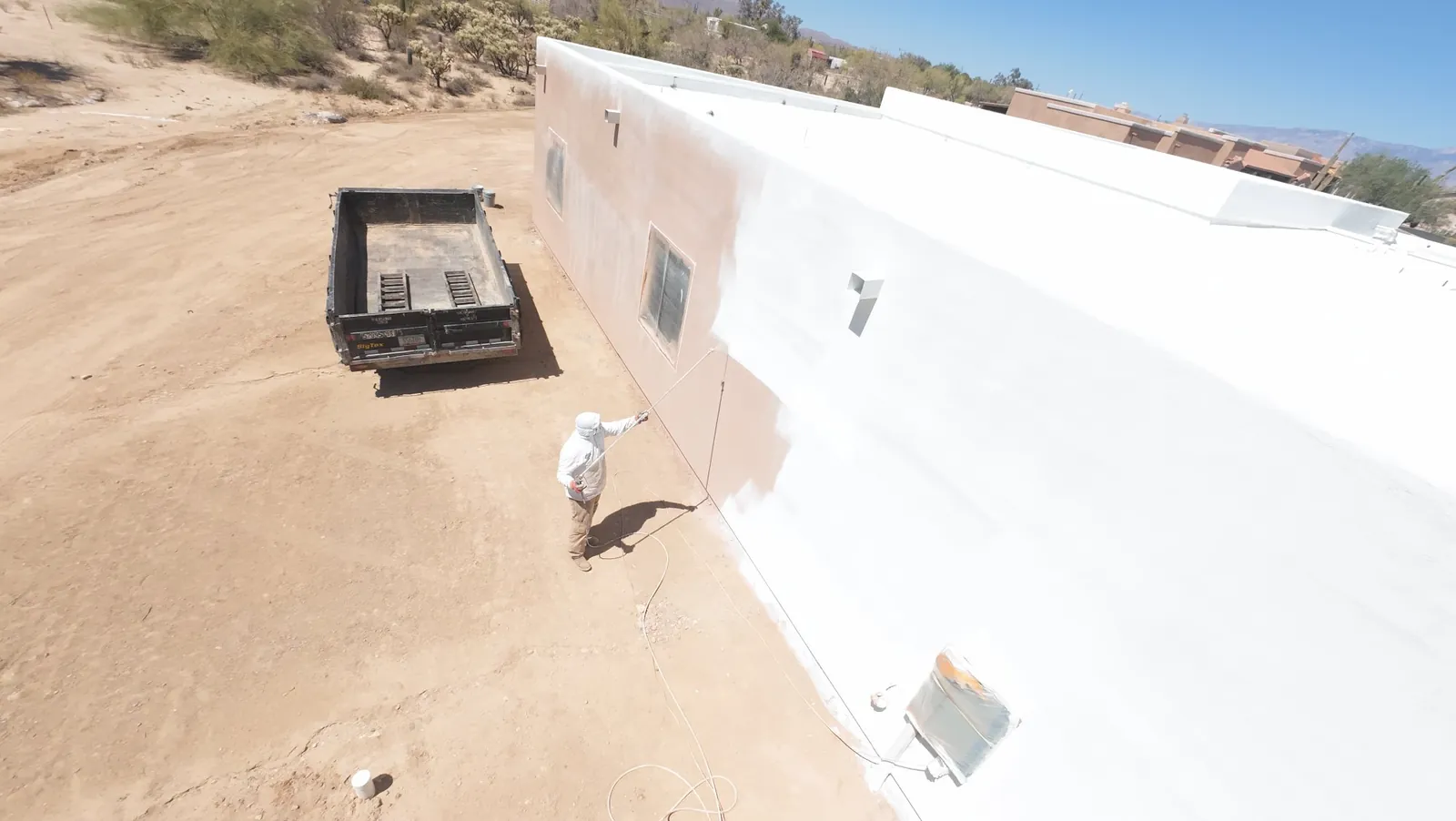
The right months
Best: October through April. Mild temperatures, low rain risk, and surfaces that stay within product specification all day. This is when we schedule most exterior work, and it is worth waiting for.
Workable with care: May and early June. Hot, but dry and predictable. We follow the shade around the building and start early.
Avoid: June 15 to September 30. Monsoon season combines the highest surface temperatures of the year with sudden heavy rain and blowing dust. Any of the three ruins a fresh coating, and all three can happen in one afternoon.
If someone offers to paint your house in early August with no discussion of surface temperature or the forecast, that is worth noticing.
Scope
Hairline cracking is normal on Tucson stucco and cosmetic. Cracks wider than about 1/8 inch, stair-stepping cracks, or cracks that reopen after repair indicate movement and need the cause addressed before any coating goes on.
Full re-coat over existing stucco, patching of damaged areas, and matching texture on additions — which is the hardest thing in the trade and often argues for re-coating a whole elevation rather than patching it.
High-build coatings that bridge hairline cracks and remain flexible through Tucson's daily thermal cycling. Substantially more durable than standard exterior latex on stucco, and priced accordingly.
Pressure washing, chalk removal, efflorescence treatment, priming and sealing of bare stucco. This is where the job is won, and it is where cheap quotes cut.
Wood trim, fascia, garage doors, wrought iron and front entries. Wood and iron in Tucson sun need attention on a shorter cycle than stucco does.
Desert palettes that hold up to intense light. Deep and saturated colours fade measurably faster here, and a colour chosen indoors rarely looks the same on a sunlit wall — we sample on the actual elevation.
Diagnosis First
Not all cracks mean the same thing. Coating over the wrong kind hides a problem rather than solving it.
Fine, web-like cracks across a field of stucco. Normal shrinkage and thermal cycling, cosmetic rather than structural. An elastomeric coating bridges these and is the correct response.
Cracks running diagonally from window and door corners are stress concentrations. Usually minor, but if they reopen within a year of repair, something is moving and the movement is the problem — not the stucco.
Cracks following the mortar joints in a diagonal stair pattern on a masonry wall indicate foundation movement. This is a structural question and needs assessment before any cosmetic work. Painting over it is money spent to hide information you need.
Stucco that sounds hollow when tapped has delaminated from the substrate, usually because water got behind it. It must be cut out and rebuilt. Coating over delaminated stucco simply hides an area that will fall off later, often taking the new coating with it.
Efflorescence — mineral salts carried to the surface by moisture moving through the wall. It signals a water source that needs finding. Paint applied over efflorescence will not bond and will peel.
Water is running somewhere it should not, usually a flashing or sealant failure above. Fixing the source comes before the cosmetics, or you will be repainting the same streak in two years.
How It Runs
We walk the whole envelope and identify what the cracking and staining actually mean. Anything structural or water-related gets flagged before we quote coatings.
Delaminated stucco cut out and rebuilt, cracks repaired with the right material for their type, flashing and sealant failures corrected, wood repaired or replaced.
Pressure washing, chalk and efflorescence removal, masking and full protection of windows, hardware, roofing and landscaping.
Bare and repaired stucco sealed so the topcoat bonds and absorbs evenly. Skipping this is the most common reason a repainted Tucson house flashes and blotches.
Applied within the product's temperature specification, following the shade around the building through the day, at the specified film thickness rather than thinned to stretch coverage.
Fascia, trim, doors and iron. Then a walkthrough in daylight — raking light shows everything, which is exactly why we do it then.
Straight Answers
2026 ranges for prepared, properly sequenced exterior work. Prep quality is the main reason two quotes for the same house can differ by half.
| Scope | Typical Tucson Range | What Drives It |
|---|---|---|
| Exterior repaint — single story | $4,500 – $11,000 | Full prep, prime and two coats on a typical Tucson single-story home, including trim and fascia. Elastomeric coating sits at the upper end. |
| Exterior repaint — two story | $8,500 – $19,000 | Additional access equipment and labour. Height is a bigger cost driver than area. |
| Elastomeric coating (premium upgrade) | $0.80 – $2.00 / sq ft extra | High-build, crack-bridging and flexible through thermal cycling. Typically the right call on stucco in Tucson, and it extends the repaint cycle meaningfully. |
| Stucco crack repair | $450 – $3,500 | Depends entirely on extent and whether the cause is cosmetic or movement. Diagnosis first — we will not coat over cracking we have not understood. |
| Re-stucco over existing | $4 – $9 / sq ft | New stucco coat over sound existing substrate. The reliable answer when patching an addition would leave a visible seam. |
| Full stucco replacement | $9 – $16 / sq ft | Removal down to substrate, new lath, scratch, brown and finish coats. Required where existing stucco has delaminated extensively. |
Building an addition? Budget the exterior coating of the affected elevation with it — matching new stucco to weathered old stucco invisibly is close to impossible, and re-coating the elevation is the honest fix.
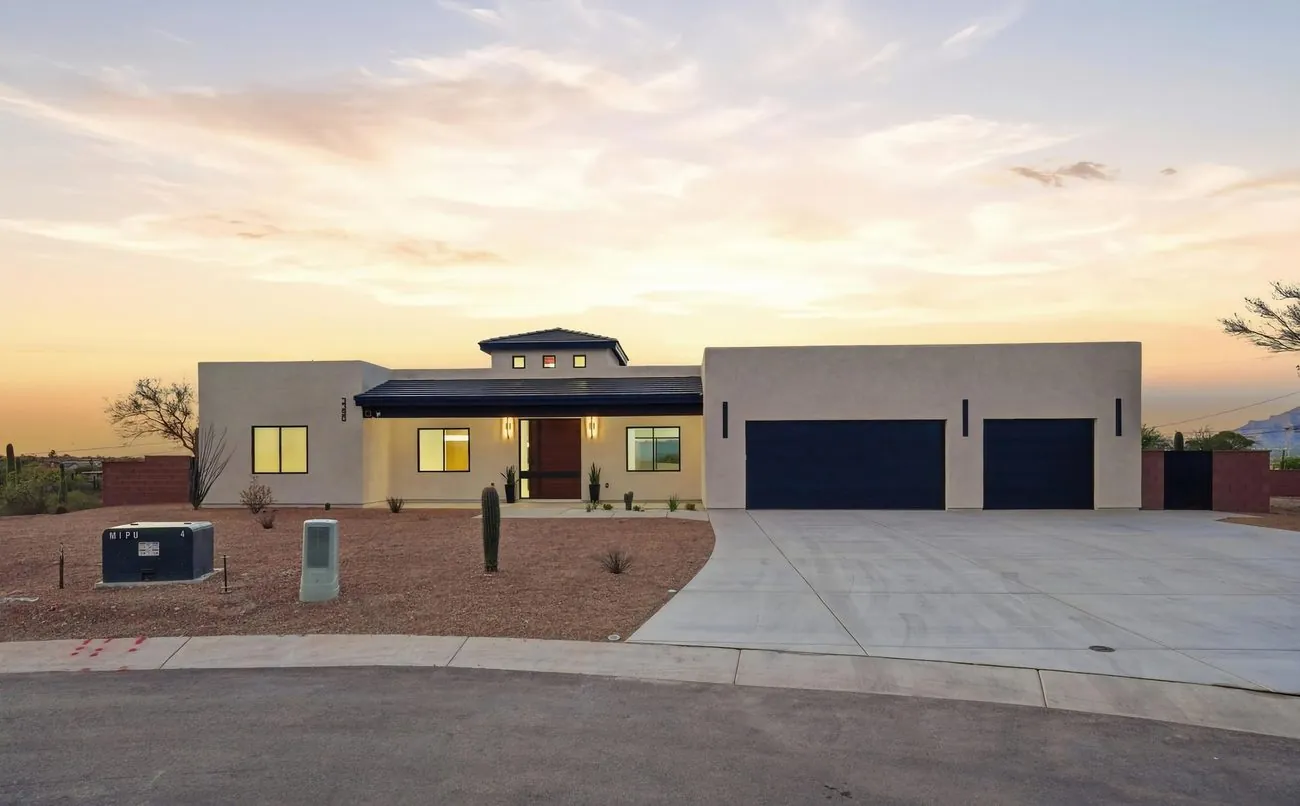
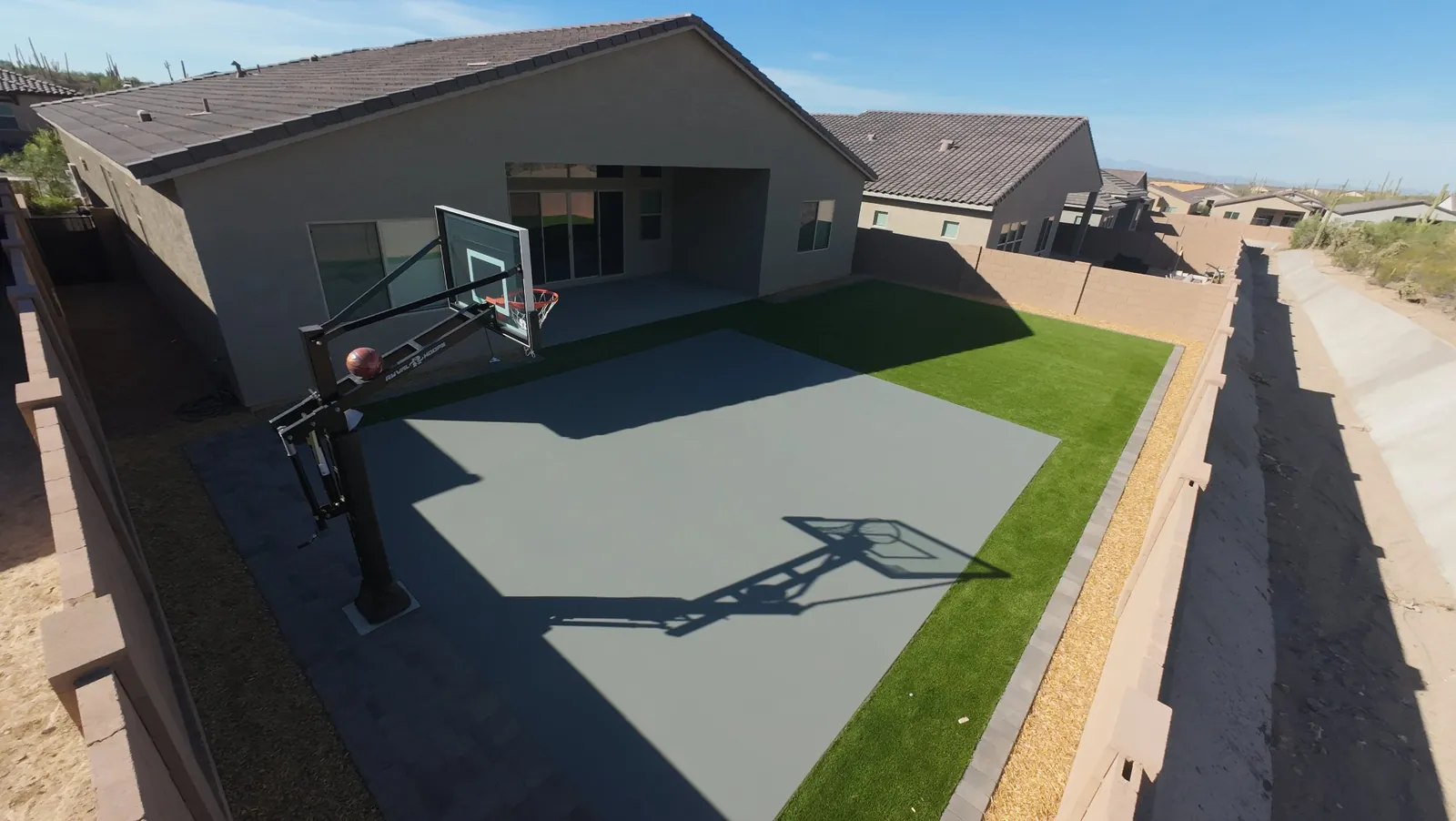
Recent Work
Keep Exploring
Where We Work
We serve the whole Tucson metro. Pick your community for local detail — permitting authority, housing stock and what we typically build there.
Tucson · Oro Valley · Marana · Catalina Foothills · Sahuarita · Tanque Verde · Vail · Rita Ranch · Dove Mountain · Flowing Wells · Midvale Park · South Tucson · All service areas →
Straight Answers
A typical single-story Tucson home runs $4,500–$11,000 for full preparation, priming and two coats including trim and fascia. Two-story homes run $8,500–$19,000, mainly because of access equipment and labour rather than area.
Elastomeric coating adds roughly $0.80–$2.00 per square foot over standard exterior paint and is usually worth it on stucco here, because it bridges hairline cracks and extends the repaint cycle.
Every five to seven years for standard exterior paint on stucco, and eight to twelve for a quality elastomeric coating that was properly applied.
South and west elevations always fail first — they take the most UV — so it is common and sensible to recoat those elevations on a shorter cycle than the north side. Deep and saturated colours fade measurably faster than light ones here.
October through April. Temperatures stay within product specification all day, rain risk is low, and surfaces do not exceed the maximum application temperature.
We avoid June 15 to September 30 — monsoon season combines the year's highest surface temperatures with sudden heavy rain and blowing dust, any of which will ruin fresh coating. A wall in direct July sun can exceed 140°F, well above what most coatings allow, and paint applied to it will fail early regardless of quality.
On stucco in Tucson, usually yes. It is a high-build, flexible coating that bridges hairline cracks and moves with the daily thermal cycling that opens and closes them.
Two caveats. It costs more, and it must be applied at the specified film thickness — an elastomeric thinned or spread to stretch coverage performs worse than good standard paint would have. And it should not be applied over delaminated stucco or unresolved moisture, because it will seal moisture in.
Fine, web-like hairline cracking is normal shrinkage and thermal movement — cosmetic, and exactly what an elastomeric coating is designed to bridge.
Cracks wider than about 1/8 inch, diagonal stair-stepping cracks that follow mortar joints on block walls, or cracks that reopen within a year of repair suggest movement and should be assessed before any cosmetic work. And stucco that sounds hollow when tapped has delaminated — it has to be cut out and rebuilt, because coating over it just hides a section that will eventually fall off.
We can get close, and on a small patch in a discreet location that is often good enough. On a visible elevation, honestly, a patch will usually show in raking light.
Stucco texture is hand-applied and every applicator's hand is slightly different, and existing stucco has weathered and faded in a way new material has not. Where the match matters — an addition, a large repair — the reliable answer is to re-coat the whole elevation. We would rather quote that up front than deliver a patch you notice every time you pull into the driveway.
Painting does not require a permit, and neither does re-coating existing stucco.
Structural repairs behind the stucco, replacing sheathing, or changes to windows and openings do require permits. If you are in a Historic Preservation Zone — Sam Hughes, El Presidio, Armory Park, Barrio Viejo — exterior colour and material changes may need review even when no building permit is required.
Lighter and mid-tone desert colours — sand, adobe, warm greys, muted terracotta — hold their appearance considerably longer than deep, saturated shades. Intense reds, dark blues and near-blacks fade visibly within a few years of Tucson UV.
Lighter exteriors also reduce heat gain into the wall assembly, which shows up on summer cooling bills. We sample colours on the actual elevation and look at them at different times of day, because a colour chosen from a chip indoors almost never reads the same on a sunlit stucco wall.
Ends September 30 · left
Sign a full bathroom remodel by September 30 and pick one premium upgrade, included at no cost. Not a discount — an actual upgrade to the finished room, specified and installed as part of the build.
Custom-templated to your finished walls after tile. The single upgrade that most changes how a bathroom reads.
Electric in-floor heat under the tile, on its own thermostat. Impossible to retrofit later without pulling the floor up again.
A step up in cabinetry and countertop material — the two things you touch every morning for the next fifteen years.
One upgrade per household, on full bathroom remodels signed by September 30, 2026. Upgrade is specified during design and installed with the project; it cannot be exchanged for a credit or discount. Consultations and written estimates are always free and carry no obligation.
Free exterior assessment — we diagnose what the cracking and staining actually mean before quoting a single gallon of anything.