Size
Up to 1,000 sq ft, or 75% of the primary dwelling — whichever is smaller — with a minimum of 650 sq ft guaranteed for detached and attached units. Junior ADUs are not currently permitted in Tucson.
✦ September Bathroom Event — free design consultation plus one premium upgrade included. Book by September 30. Call (520) 548-2125 left
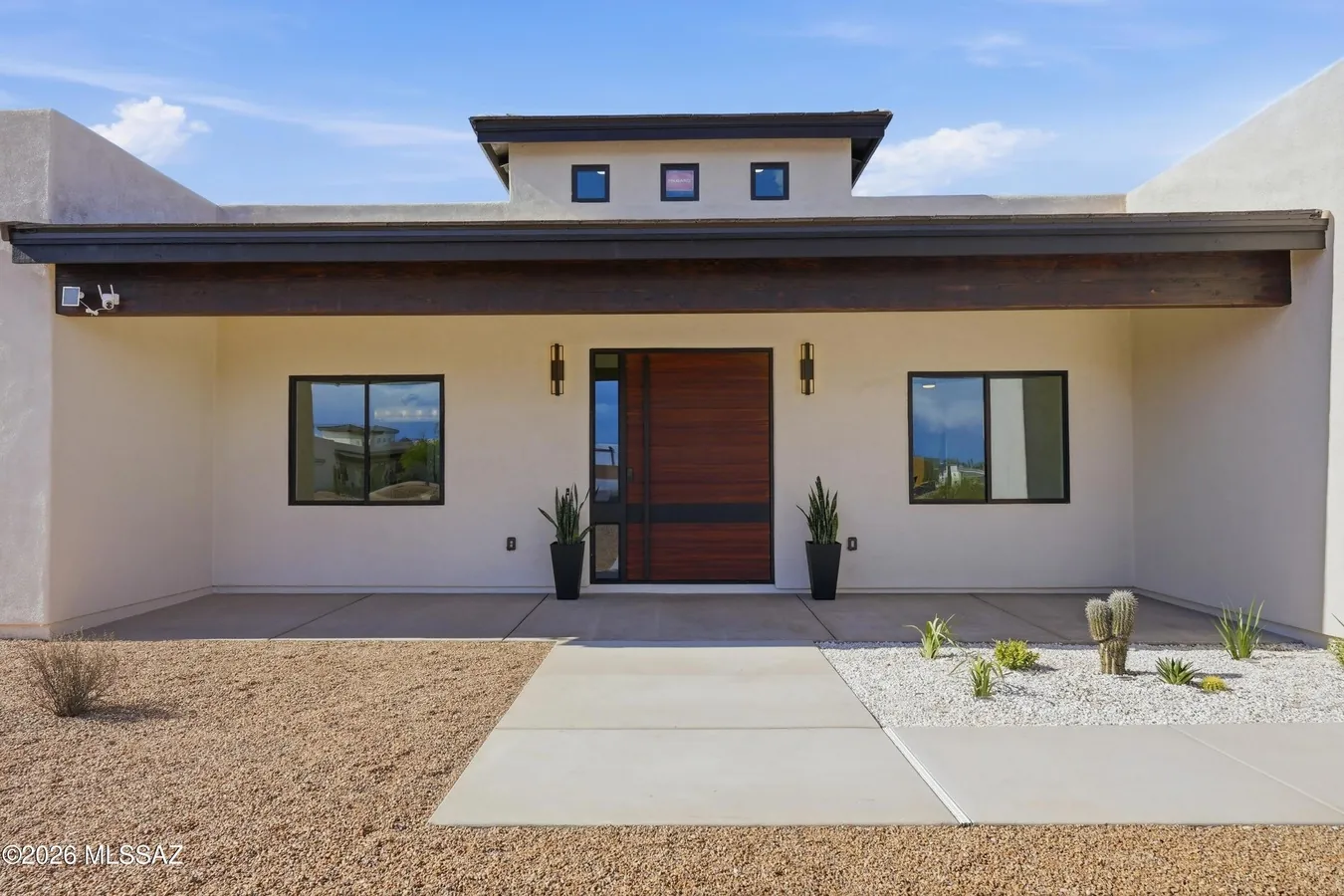
Accessory Dwelling Units
Arizona changed the casita rules, and most Tucson homeowners still don't know it. Up to 1,000 square feet, permitted by right, no owner-occupancy requirement, no extra parking.
For years, building a casita in Tucson meant a discretionary process, a public hearing, and a real chance of being told no after spending money on drawings. That is no longer the case.
Arizona House Bill 2720, codified at A.R.S. § 9-416.18, requires municipalities above 75,000 people — Tucson very much included — to permit accessory dwelling units on lots with single-family homes by right. In practice that means a ministerial review rather than a discretionary one: if the plans meet the standards, the permit issues. No public hearing, no neighbour veto.
The specifics matter and they are unusually favourable. Tucson allows a casita of up to 1,000 square feet (or 75% of the primary dwelling, whichever is less, with at least 650 square feet guaranteed). Rear and side setbacks are capped at five feet. The city cannot require you to live on the property — the owner-occupancy mandates that used to kill these projects are prohibited by statute. And since November 2024, no additional parking space is required.
One restriction to be clear about, because it changes the financial case for some people: Tucson does not permit casitas to be used as short-term rentals. This is a long-term rental, a family space, or a home office — not an Airbnb.
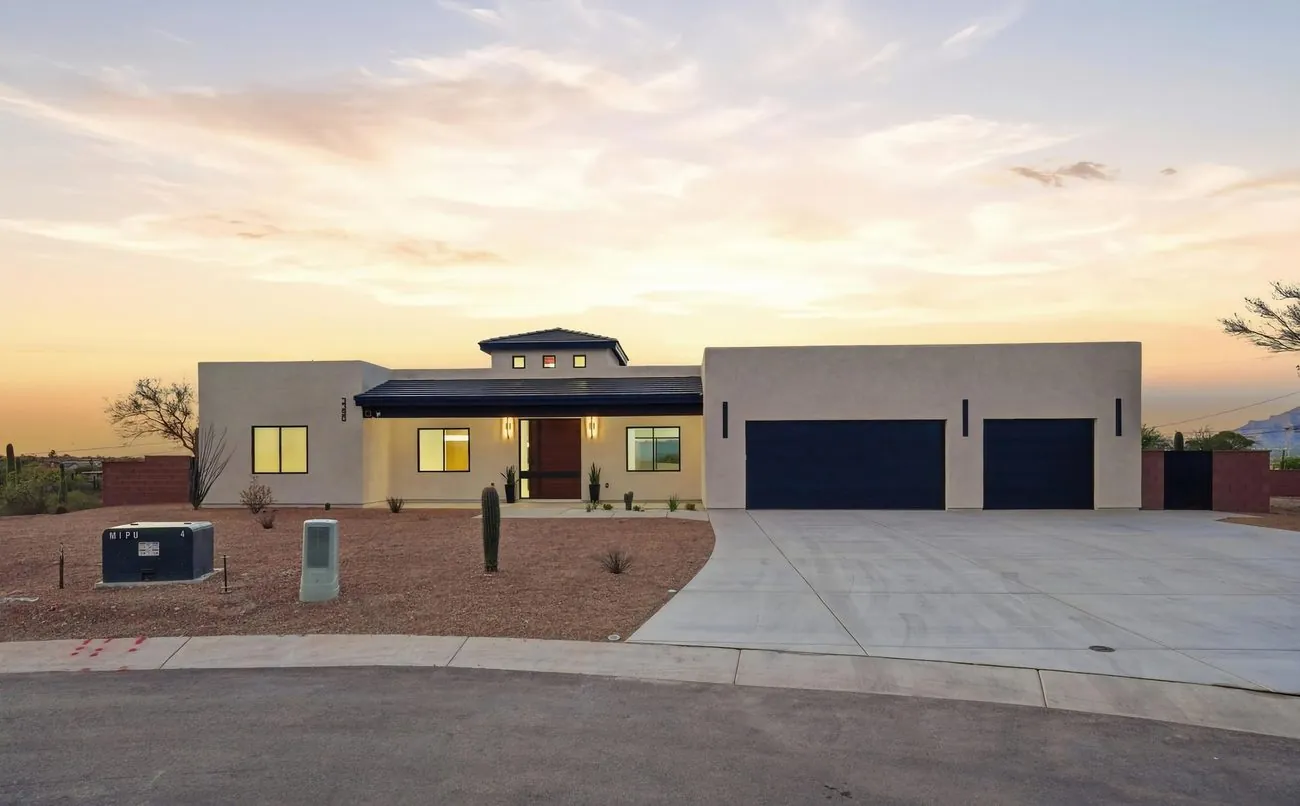
Who this actually works for
Multigenerational families. The most common reason we get called. A parent who needs to be close but not in the house, or an adult child who needs somewhere to land. A casita solves that better than any addition because the separation is real.
Long-term rental income. With owner-occupancy requirements now prohibited, a casita is a genuine income property on land you already own — no lot purchase, no separate utility connections to the street in most cases.
Working from home properly. A detached office with its own door, its own bathroom and no acoustic connection to family life. For a household with two people on calls all day, this is often the whole argument by itself.
It works less well if your lot is tight, if your HOA has restrictive covenants that survive the state law, or if the plan depended on short-term rental income, which Tucson does not allow.
The Rules
Up to 1,000 sq ft, or 75% of the primary dwelling — whichever is smaller — with a minimum of 650 sq ft guaranteed for detached and attached units. Junior ADUs are not currently permitted in Tucson.
Rear and side setbacks capped at five feet from property lines under HB 2720. Front setbacks follow the underlying zone.
Matches the single-family height limit for your zone, generally up to 25 feet — worth confirming for your specific parcel before designing a two-story casita.
Not required. The statute prohibits municipalities from mandating that the owner live on site, so the casita or the main house can be rented.
No additional parking space required as of November 21, 2024 — a change that made many smaller and older lots viable for the first time.
Not permitted in Tucson. Casitas may be used as long-term rentals, family housing or accessory living space, but not as vacation rentals.
Routes To A Casita
They differ enormously in cost, and the cheapest is not always the right answer.
A purpose-built casita on your lot. The most expensive route at roughly $145–$290 per square foot, and the one that produces exactly what you want — orientation, layout, privacy and a building designed to match your house. Typically $110,000–$220,000 all in.
The cheapest route by a wide margin at roughly $55,000–$130,000, because the slab, walls and roof already exist. Requires insulation, conditioned air, egress, usually a raised or levelled floor, and new plumbing. The trade-off is losing the garage — think hard about where cars, tools and storage go afterwards.
Built onto the existing house but with its own entrance, kitchen and bathroom, and typically no interior connection. Cheaper than detached because one wall and part of the foundation already exist, but privacy and acoustic separation are harder to achieve well.
Watch Out For
The state law removed the biggest obstacles. These four remain.
State law binds municipalities, not private covenants. Many Tucson-area HOAs — particularly in Oro Valley, Marana, Dove Mountain and Rita Ranch — have restrictions on accessory dwellings, second kitchens or rentals that still apply. Check your CC&Rs before you spend on design.
Even with five-foot setbacks, your zone limits total lot coverage. On a small midtown lot with an existing house and a covered patio, there may not be room for 1,000 square feet.
A casita needs water, sewer or septic, and electrical service. Existing service is often adequate, but an older 100-amp panel usually is not, and septic systems have to be evaluated for the additional load — which matters in Tanque Verde, Vail and parts of the Foothills.
If your address is in Catalina Foothills, Tanque Verde, Vail or another unincorporated area, you are under Pima County rather than the City of Tucson. County ADU rules are not identical to the city's. We confirm jurisdiction before anything else.
How It Runs
First question, always: who permits your address, and what does your HOA allow? Then lot coverage, setbacks, utility capacity and where the casita can actually sit.
Layout, elevations and how it relates to the main house. A casita that looks like an outbuilding hurts your property value; one that looks like it was always there adds to it.
Ministerial review under HB 2720 — no public hearing. Building permit fees in Tucson typically run $3,500–$5,500 with impact fees of roughly $1,200–$2,000. Review commonly takes 90 to 120 days.
Utility trenching, footings and slab. Caliche affects this stage here more than any other, so we soil-test at feasibility rather than guessing.
Framing, roof, windows and doors, weather-tight as quickly as the schedule allows and always mindful of monsoon timing.
MEP, insulation, drywall, kitchen, bathroom, flooring and exterior finish matched to the main house. Final inspections and certificate of occupancy.
Straight Answers
2026 Tucson ranges including design, permits and construction. Permit and impact fees are separate line items and are listed below so you can see them.
| Scope | Typical Tucson Range | What Drives It |
|---|---|---|
| New detached casita — construction | $145 – $290 / sq ft | A 650 sq ft casita typically runs $110,000–$190,000; an 800–1,000 sq ft unit runs $150,000–$220,000+ depending on finish level and site conditions. |
| Garage conversion to casita | $55,000 – $130,000 | The most economical route. Includes insulation, HVAC, egress, kitchen, bathroom, flooring and floor levelling. Excludes replacing the parking you lose. |
| Attached casita | $130 – $260 / sq ft | Shares a wall and part of the foundation with the existing house, which brings the per-foot cost below detached construction. |
| City of Tucson building permit | $3,500 – $5,500 | Ministerial review under HB 2720 — no public hearing required. Review commonly runs 90–120 days. |
| Impact fees | $1,200 – $2,000 | Assessed separately from the building permit. Amounts vary by jurisdiction — Pima County and the towns differ from the City of Tucson. |
| Utility connections and upgrades | $5,000 – $25,000 | Water and sewer trenching, and electrical service. An older 100-amp panel almost always needs upgrading. Septic evaluation adds cost in Tanque Verde, Vail and parts of the Foothills. |
Compare against a home addition if the space needs to connect to the main house, and see the Tucson remodeling cost guide for how casitas sit against everything else.
Recent Work
Local Detail
Where the community changes the work enough to be worth its own page.
Keep Exploring
Where We Work
We serve the whole Tucson metro. Pick your community for local detail — permitting authority, housing stock and what we typically build there.
Tucson · Oro Valley · Marana · Catalina Foothills · Sahuarita · Tanque Verde · Vail · Rita Ranch · Dove Mountain · Flowing Wells · Midvale Park · South Tucson · All service areas →
Straight Answers
In almost all cases, yes. Arizona's HB 2720, codified at A.R.S. § 9-416.18, requires cities above 75,000 people — including Tucson — to permit accessory dwelling units by right on lots with single-family homes. That means ministerial review: if the plans meet the standards, the permit issues, with no public hearing.
The practical limits are your lot's coverage allowance, your HOA's covenants, and whether your address is in the City of Tucson or unincorporated Pima County, which has its own rules.
Up to 1,000 square feet, or 75% of the primary dwelling — whichever is smaller — with a minimum of 650 square feet guaranteed for detached and attached units.
Rear and side setbacks are capped at five feet under the state law, and height follows the single-family limit for your zone, generally up to 25 feet. Junior ADUs (a converted bedroom with its own entrance) are not currently permitted in Tucson.
New detached construction runs roughly $145 to $290 per square foot, which puts a 650 square foot casita around $110,000–$190,000 and a 1,000 square foot unit at $150,000–$220,000 or more.
A garage conversion is by far the cheapest route at roughly $55,000–$130,000, because the slab, walls and roof already exist. Building permit fees typically run $3,500–$5,500 with impact fees of about $1,200–$2,000 on top.
No. HB 2720 specifically prohibits municipalities from imposing owner-occupancy requirements on accessory dwelling units. You can rent the casita, or rent the main house and live in the casita.
This is the single change that most improved the financial case for building one, because owner-occupancy mandates previously made casitas unworkable as investment properties.
Not in Tucson. Short-term rental use of accessory dwelling units is not permitted here, even though the state law opened up ADUs in most other respects.
Casitas can be used as long-term rentals, housing for family, guest accommodation or accessory living space such as a home office or studio. If your financial model depends on nightly rates, this is the constraint to know before you spend anything on design.
No. As of November 21, 2024, Tucson does not require an additional parking space for an accessory dwelling unit.
That change is more consequential than it sounds — parking requirements were what made casitas impossible on many smaller midtown and older-neighbourhood lots, and removing it brought a large number of properties into play.
Ministerial review in Tucson commonly runs 90 to 120 days from submission, though it varies with the department's workload and the completeness of the submission.
Design and engineering happen before that, and construction follows. Realistically, plan on roughly twelve to eighteen months from first conversation to certificate of occupancy for a new detached casita, and meaningfully less for a garage conversion.
Generally, no. HB 2720 binds municipalities — cities and towns — not private covenants between homeowners and their associations.
Many Tucson-area HOAs, particularly in Oro Valley, Marana, Dove Mountain and Rita Ranch, have covenants restricting accessory dwellings, second kitchens or rental use, and those restrictions generally still apply. Read your CC&Rs before spending money on drawings — it is the first thing we check.
Ends September 30 · left
Sign a full bathroom remodel by September 30 and pick one premium upgrade, included at no cost. Not a discount — an actual upgrade to the finished room, specified and installed as part of the build.
Custom-templated to your finished walls after tile. The single upgrade that most changes how a bathroom reads.
Electric in-floor heat under the tile, on its own thermostat. Impossible to retrofit later without pulling the floor up again.
A step up in cabinetry and countertop material — the two things you touch every morning for the next fifteen years.
One upgrade per household, on full bathroom remodels signed by September 30, 2026. Upgrade is specified during design and installed with the project; it cannot be exchanged for a credit or discount. Consultations and written estimates are always free and carry no obligation.
Free feasibility review — jurisdiction, HOA covenants, lot coverage, setbacks and utility capacity — before you spend a dollar on design.