Driveways
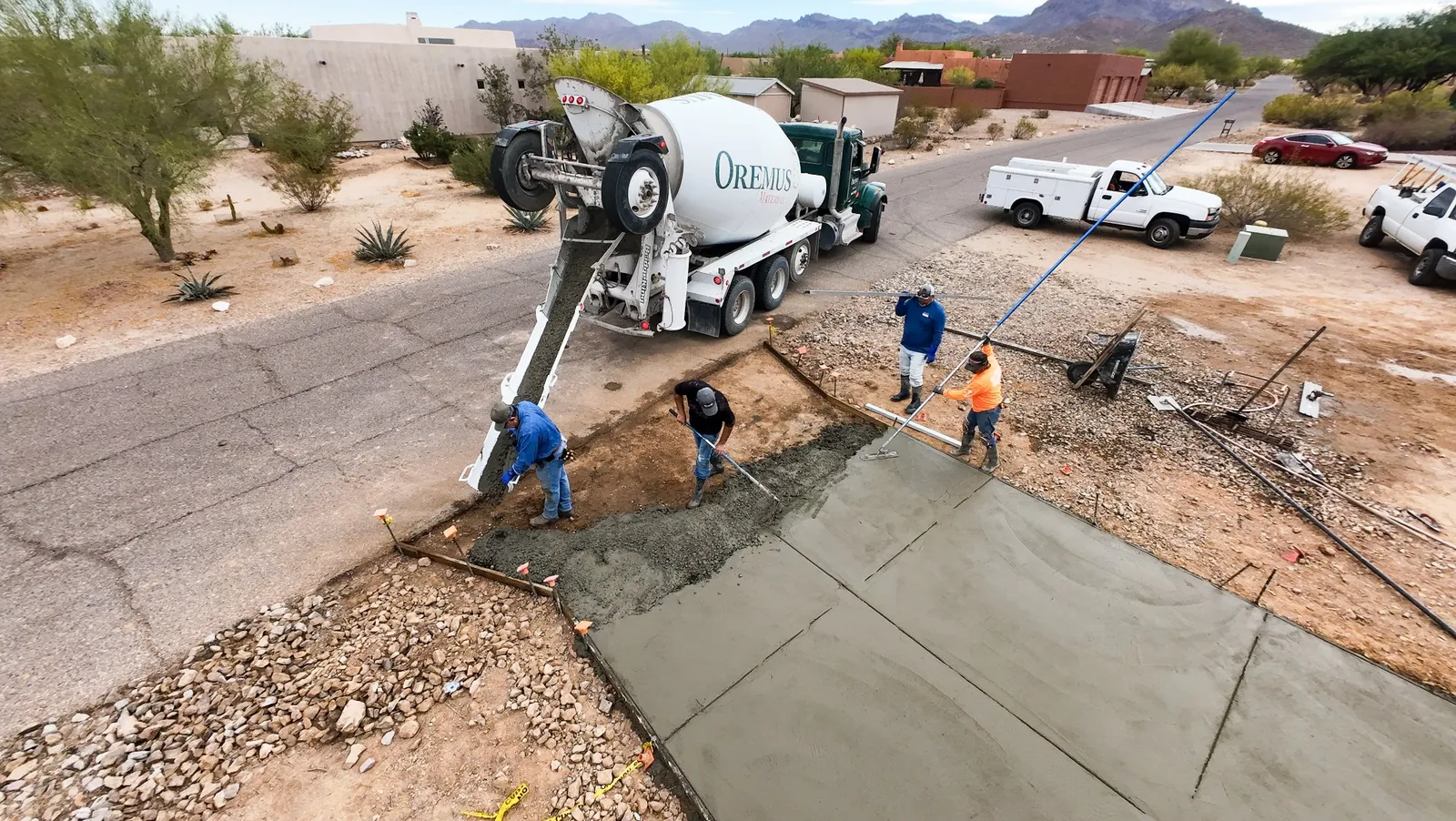
New pours, replacements and extensions. Thickness and reinforcement specified to actual vehicle loads. Note that connecting a new driveway to a public street requires a separate right-of-way permit in Tucson.
✦ September Bathroom Event — free design consultation plus one premium upgrade included. Book by September 30. Call (520) 548-2125 left
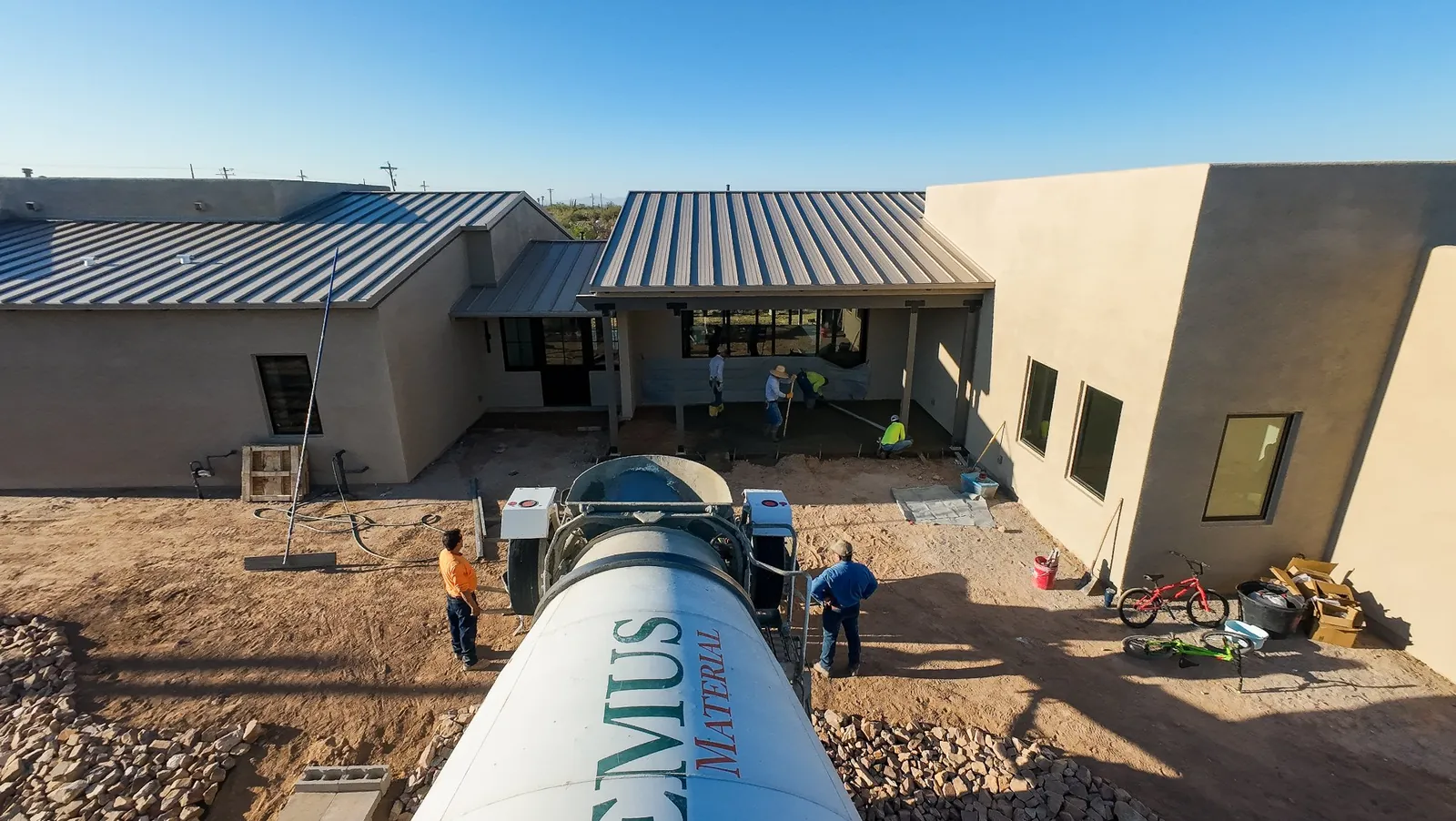
Hardscape & Landscape
Driveways, patios, pavers, turf and desert landscape — built on a base that accounts for caliche, poured for 105°F heat, and graded for an inch of rain in an hour.
All concrete cracks. Anyone who tells you their slab will not is selling something. Concrete shrinks as it cures and moves with temperature, and in a climate that swings forty degrees between afternoon and dawn it moves a lot. The craft is not preventing cracks — it is controlling where they happen, so they land in a tooled or saw-cut joint where they are invisible, rather than wandering across the middle of your patio.
That control comes from three things. A properly compacted base, which in Tucson means dealing with caliche and with the expansive clays found in some areas. Correct joint spacing and depth, cut early enough — generally within the first day — to relieve stress before the slab decides for itself. And a mix and a cure appropriate to the temperature it is being placed in.
That last point is genuinely local. Concrete placed in Tucson summer heat sets fast — sometimes far faster than the crew can finish it properly — which causes plastic shrinkage cracking, a weak surface and poor finish. Summer pours need early starts, cool water or ice in the mix, retarders, and an aggressive curing regime. Skipping any of that on a July pour produces a driveway that looks acceptable for a season and then starts spalling.
The fourth thing, and it matters more than people expect: drainage. Every square foot of hardscape you add is a square foot that no longer absorbs water. In a monsoon that can drop an inch in an hour, a patio sloped the wrong way sends that water at your foundation.
Concrete or pavers?
Concrete costs less per square foot, gives a clean continuous surface and suits modern and contemporary architecture. It will craze and it will crack at the joints, and a repair is visible — you cannot patch concrete invisibly.
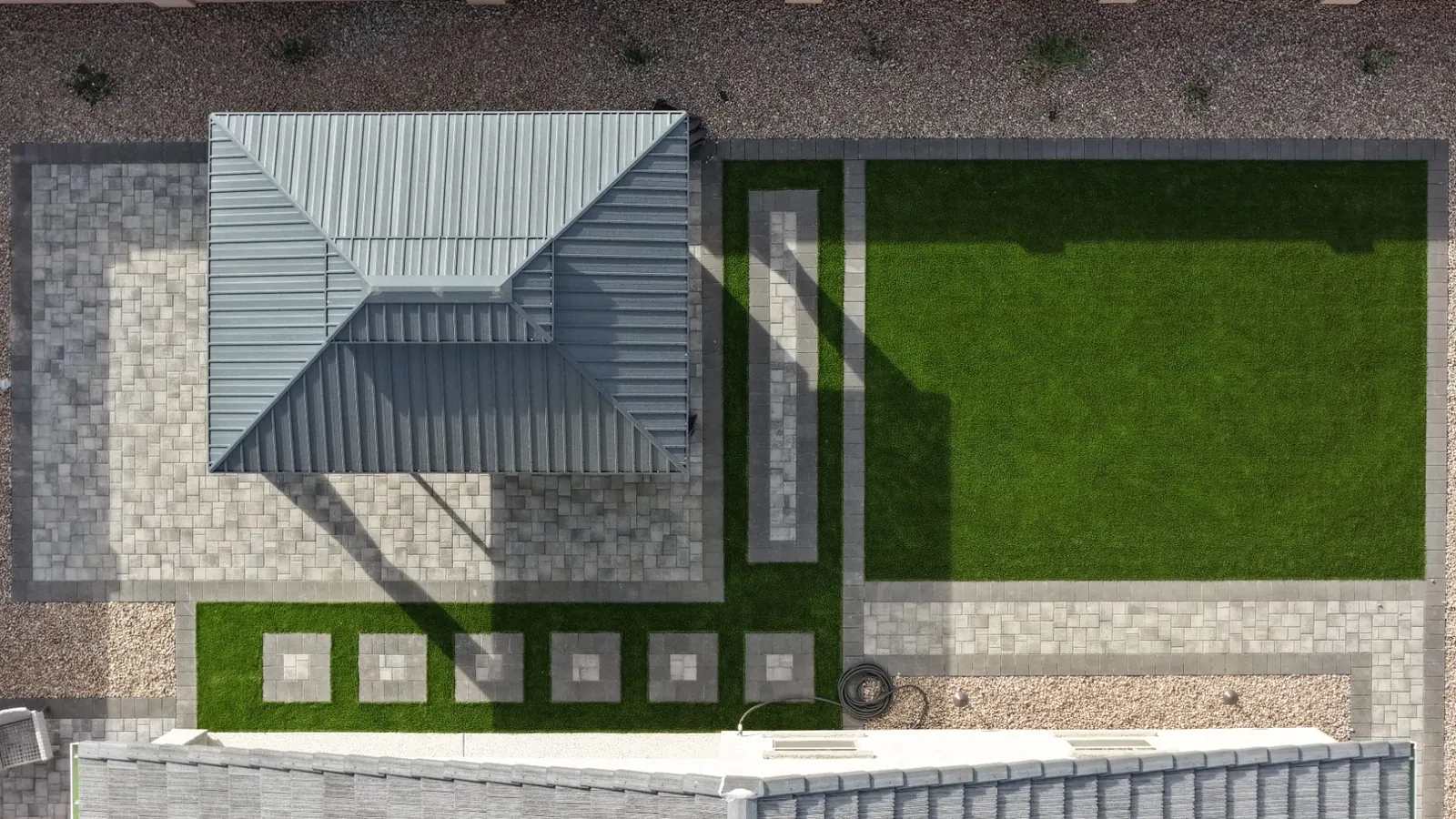
Pavers cost more up front and are individually replaceable, which is their real advantage. If a utility has to be trenched or a section settles, you lift the pavers, do the work, and relay them with no visible scar. They also handle ground movement better because the joints are already everywhere.
For heat: light-coloured pavers and travertine stay meaningfully cooler underfoot than dark concrete. Around a pool or anywhere people walk barefoot, that single factor usually decides it.
Our honest default: concrete for driveways, pavers or travertine for patios and pool decks. But it depends on your house, and we will say which we would choose for yours.
Scope
New pours, replacements and extensions. Thickness and reinforcement specified to actual vehicle loads. Note that connecting a new driveway to a public street requires a separate right-of-way permit in Tucson.
Concrete, pavers or travertine. Sloped away from the house, with surface temperature and slip resistance driving material choice as much as appearance.
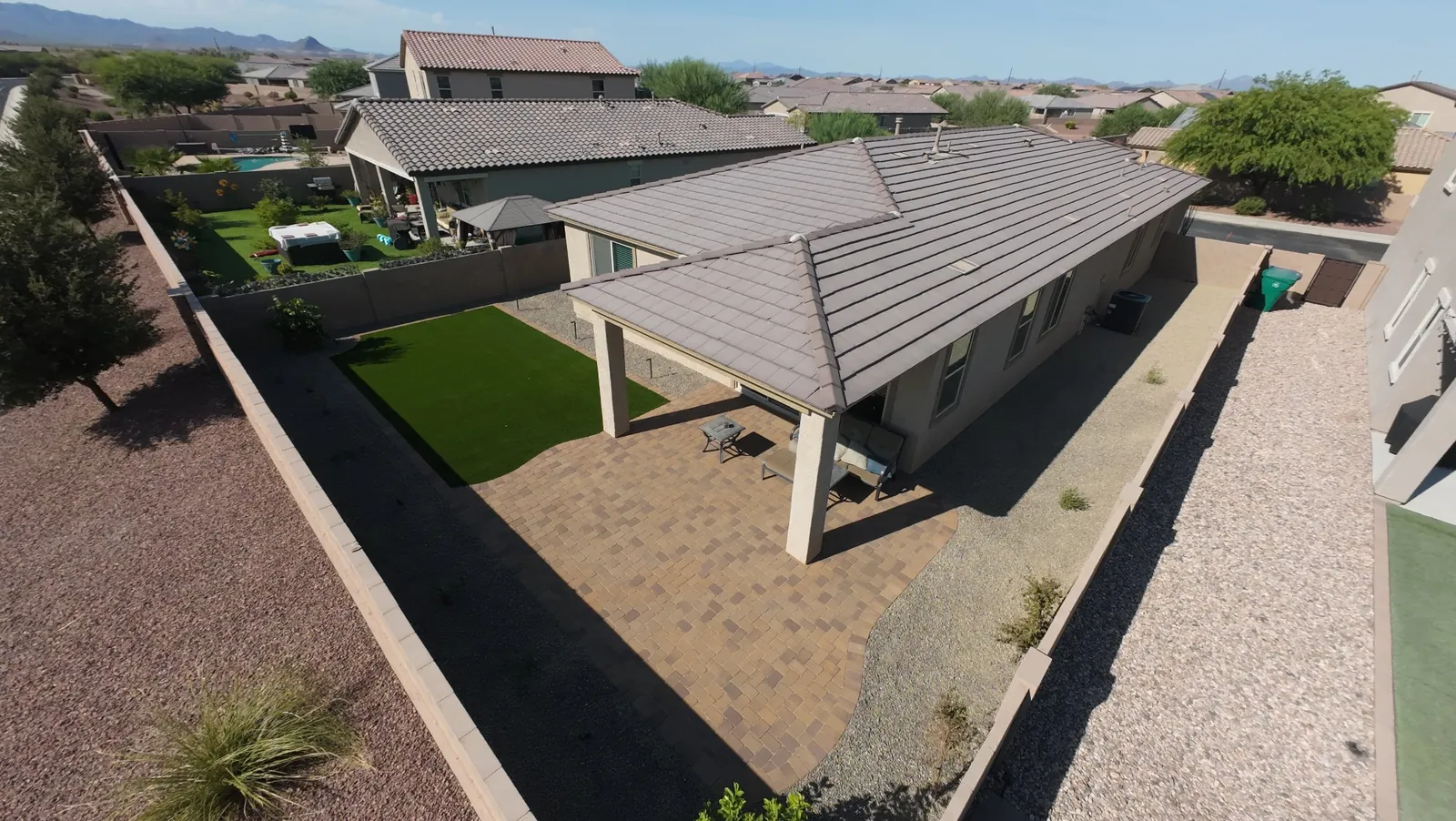
Paver patios, walkways, driveways, seat walls and steps on a properly compacted and edged base — because paver failures are almost always base failures.
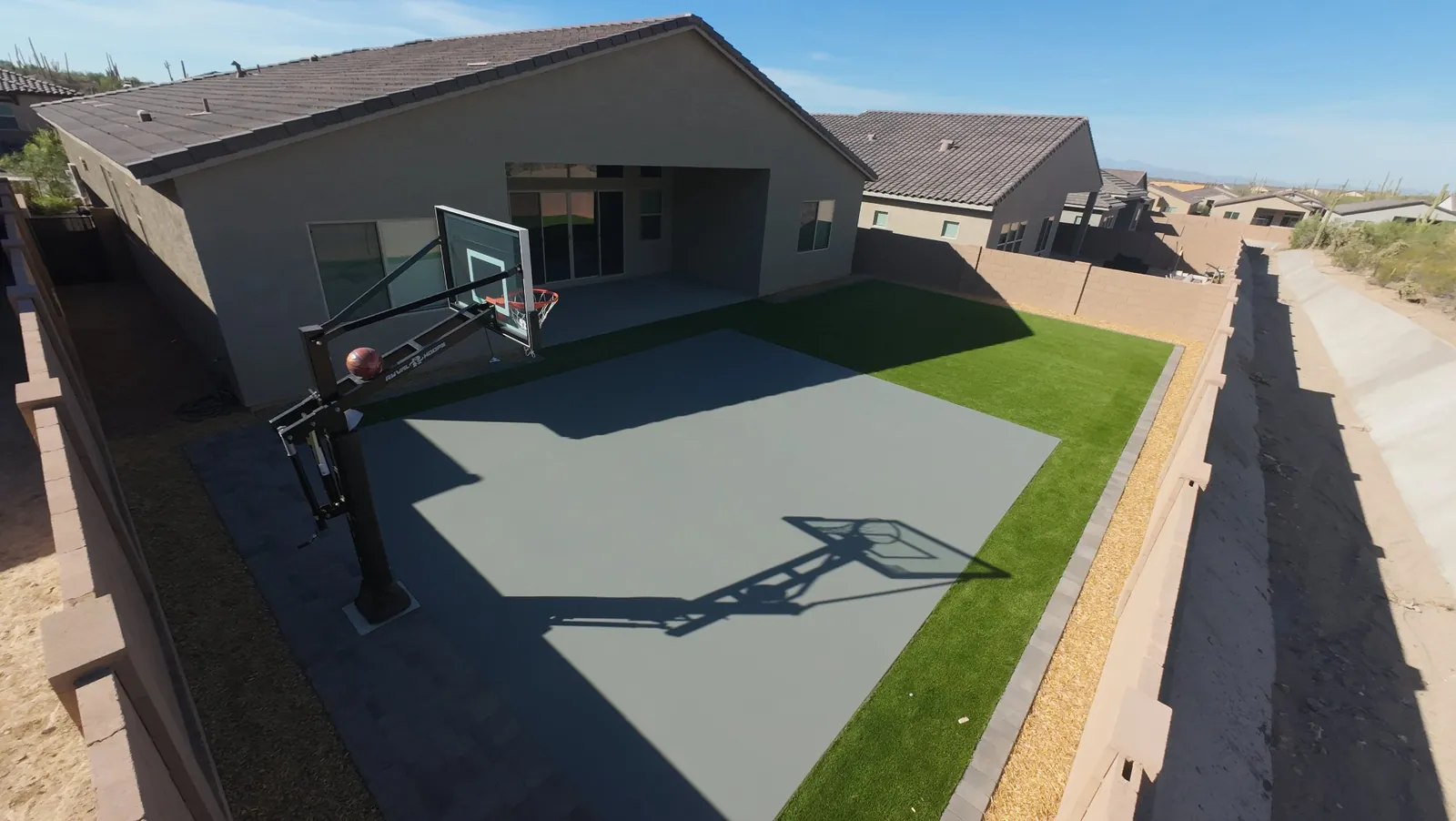
Excavation, drainage layer, compacted base and turf. Specification matters: cheap turf with the wrong infill gets uncomfortably hot in direct Tucson sun and mats down within a couple of years.
Decomposed granite, boulders, native and low-water planting, drip irrigation and low-voltage lighting. Designed to look established rather than newly installed.
Site grading, swales, French drains and rainwater harvesting basins. The unglamorous work that determines whether monsoon runoff is an asset or a foundation problem.
Ground Truth
Four site conditions that decide whether hardscape lasts a decade or starts failing in year two.
The cemented calcium carbonate layer under much of the Tucson basin. Hard to excavate — footings and trenches take longer and sometimes need a hammer attachment. It is excellent bearing material once you are through it, but it does not drain, which means water sits on top of it and has to be given somewhere to go.
Parts of the Tucson area have clay soils that swell when wet and shrink when dry. That cycle is hard on slabs and is a leading cause of cracking and heaving. Where present, it changes base preparation, slab thickness and reinforcement.
An inch of rain in an hour is an ordinary Tucson storm, not an extreme one. Every square foot of new hardscape is a square foot that no longer absorbs. Grading and drainage must be designed for the new condition, not the old one.
Concrete placed in extreme heat sets faster than it can be finished, causing plastic shrinkage cracking and a weak, dusty surface. Summer pours need early starts, chilled mix water, retarders and proper curing — or a schedule that avoids the worst weeks entirely.
How It Runs
Soil, caliche depth, existing drainage patterns and where water currently goes in a storm. Utility locates before any excavation.
Layout, elevations, slopes and joint pattern planned on paper. Joint placement is a design decision, not something decided by whoever is holding the saw.
Right-of-way permits for driveway connections to public streets, permits for walls and fences, and for driveway paving above 3,000 square feet in the City of Tucson.
Excavation to depth, base material placed and compacted in lifts, edge restraint for pavers. Nearly every long-term hardscape failure traces back to this stage.
Concrete poured, screeded, floated and finished — scheduled for temperature, with the mix adjusted for heat. Or pavers set, cut and locked in with joint sand.
Proper curing regime, joints cut on time, sealing where specified. Then planting, irrigation, granite and lighting.
Straight Answers
2026 Tucson ranges. Base preparation and drainage are included — they are not optional extras.
| Scope | Typical Tucson Range | What Drives It |
|---|---|---|
| Concrete driveway | $9 – $16 / sq ft | Excavation, compacted base, reinforcement, pour and finish. Thicker sections and reinforcement for RV or heavy vehicle loads sit at the upper end. A typical two-car driveway runs $6,000–$14,000. |
| Concrete patio | $8 – $15 / sq ft | Broom, salt or light texture finish. Stamped and coloured concrete adds roughly $4–$9 per square foot. |
| Paver patio or driveway | $16 – $30 / sq ft | Excavation, compacted base, edge restraint, pavers, cutting and joint sand. More up front than concrete and individually repairable, which is the real value. |
| Travertine pool deck | $20 – $34 / sq ft | Stays noticeably cooler underfoot than concrete or dark pavers, which is why it dominates around Tucson pools. Slip resistance when wet is good. |
| Artificial turf | $14 – $26 / sq ft | Excavation, drainage layer, compacted base, turf and infill. Quality and infill type drive both surface temperature and lifespan more than the price tag suggests. |
| Desert landscape package | $8 – $22 / sq ft | Decomposed granite, boulders, native planting, drip irrigation and low-voltage lighting. Plant size at installation is the main variable — instant maturity is expensive. |
| Drainage correction / grading | $2,500 – $18,000 | Swales, French drains, catch basins and regrading. Almost always cheaper than the foundation repair it prevents. |
| Seat walls and steps | $65 – $180 / linear ft | Block or masonry with stucco, stone veneer or paver cap. Footings sized to the wall and to the soil. |
Pairing hardscape with an outdoor kitchen or ramada is usually cheaper than doing them separately — one mobilisation, one trenching operation, one set of utility runs.
Recent Work
Keep Exploring
Where We Work
We serve the whole Tucson metro. Pick your community for local detail — permitting authority, housing stock and what we typically build there.
Tucson · Oro Valley · Marana · Catalina Foothills · Sahuarita · Tanque Verde · Vail · Rita Ranch · Dove Mountain · Flowing Wells · Midvale Park · South Tucson · All service areas →
Straight Answers
Roughly $9 to $16 per square foot including excavation, compacted base, reinforcement, pour and finish. A typical two-car driveway runs $6,000–$14,000.
Thickness and reinforcement are specified to the loads the driveway will actually carry — an RV or a delivery truck needs a materially different slab than two cars, and building for the lighter case is a false economy.
Concrete costs less, gives a clean continuous surface, and suits contemporary architecture. It will crack at the joints and cannot be repaired invisibly.
Pavers cost more up front but are individually replaceable — if a section settles or a utility needs trenching, you lift them, do the work and relay with no visible scar. They also tolerate ground movement better. Our usual recommendation for Tucson: concrete for driveways, pavers or travertine for patios and pool decks, where surface temperature underfoot matters.
All concrete cracks — it shrinks as it cures and moves with temperature, and Tucson's daily temperature swing is large. The objective is not preventing cracks but controlling where they occur.
That comes from a properly compacted base, correct reinforcement, and control joints cut at the right spacing and depth early enough — usually within the first day. Done right, the slab cracks along those joints where nobody sees it. Done badly, it cracks wherever it likes.
Yes, but it requires genuine adjustment and it is not our first choice. Concrete placed in extreme heat sets faster than a crew can properly finish it, which produces plastic shrinkage cracking and a weak, dusty surface that spalls later.
Summer pours need early morning starts, chilled mix water or ice, set retarders, and an aggressive curing regime — usually continuous moisture or a curing compound. Where the schedule allows, October through April gives a materially better result for the same money.
Patios at grade generally do not require a building permit. Connecting a new or widened driveway to a public street requires a right-of-way permit in the City of Tucson, and driveway paving over 3,000 square feet requires a permit.
Block walls and fences require permits for zoning review regardless of height, and covering a patio with a roof requires a building permit. Requirements differ between the City of Tucson, Pima County and the towns, so we confirm for your specific address.
Caliche is a naturally cemented calcium carbonate layer found through much of the Tucson basin, sometimes just below the surface. It is hard to dig and it does not drain.
For landscaping that second property is the important one. A planting hole dug into caliche behaves like a bucket — water collects and cannot percolate away, and the plant drowns in a desert. Planting holes have to be broken through the caliche layer or drainage provided, and irrigation scheduled accordingly. It is the most common reason new desert plantings fail here.
It works well for many yards, saves substantial water, and stays green through summer when nothing else does. Two things determine whether you will be happy with it.
First, quality and infill: inexpensive turf with the wrong infill gets genuinely hot in direct sun — hot enough to be uncomfortable barefoot and a concern for dogs — and mats down within a couple of years. Second, the base: turf needs excavation, a drainage layer and proper compaction, or it develops low spots that hold water and odour. Most turf complaints trace to the base, not the turf.
Grading and drainage, addressed as a design problem rather than a patch. The ground should fall away from the foundation for the first several feet, roof drainage should discharge well clear of the building, and hardscape should be sloped to move water where you want it.
Where the yard's shape works against you, swales, French drains and catch basins redirect flow, and rainwater harvesting basins turn the problem into irrigation for planting. Drainage correction typically runs $2,500–$18,000 — reliably cheaper than the foundation repair it prevents.
Ends September 30 · left
Sign a full bathroom remodel by September 30 and pick one premium upgrade, included at no cost. Not a discount — an actual upgrade to the finished room, specified and installed as part of the build.
Custom-templated to your finished walls after tile. The single upgrade that most changes how a bathroom reads.
Electric in-floor heat under the tile, on its own thermostat. Impossible to retrofit later without pulling the floor up again.
A step up in cabinetry and countertop material — the two things you touch every morning for the next fifteen years.
One upgrade per household, on full bathroom remodels signed by September 30, 2026. Upgrade is specified during design and installed with the project; it cannot be exchanged for a credit or discount. Consultations and written estimates are always free and carry no obligation.
Free site assessment covering soil, caliche, existing drainage and where monsoon water actually goes on your lot.